
SAP PP certification C_TS422 exam structure: from recipe to finished plate in one flow
I passed the SAP PP certification (C_TS422). Here is how the 180-minute hands-on exam works and how its tasks flow from master data through planning and execution to completion.
Hi, this is Rabbit! 🐰
A plate leaves a kitchen in a set order. You settle the recipe and the cooking steps, plan how many portions to make today, take out the ingredients and cook, then send out the finished plate. If someone writes down the wrong order quantity in the morning, everything from prep to portion count goes off for the rest of the day.
The SAP PP certification C_TS422 exam is built exactly this way. To start with the result: I passed C_TS422_2601. I work in production management, and this is my second SAP certification after the MM certification C_TS452.
I wrote this for anyone preparing for the PP exam, and for anyone facing a hands-on SAP exam, rather than a multiple-choice one, for the first time. This part covers the format and the task flow; the next part covers preparation and exam tips.
Three-line summary
- The SAP PP certification (C_TS422) is a hands-on exam: you log in to a real SAP system and complete tasks yourself within 180 minutes.
- Four large tasks follow one another, from master data to planning, execution and completion, and each step’s output becomes the next step’s input.
- That is why understanding “why this comes next” matters more than memorizing menu paths.
What the SAP PP certification C_TS422 covers
The official name is SAP Certified - SAP S/4HANA Cloud Private Edition, Production Planning and Manufacturing, usually just called the SAP PP certification. In restaurant terms, it covers everything the kitchen does: production planning and production execution.
There are no multiple-choice questions. It is a hands-on exam where you log in to a real SAP system and complete the given tasks yourself, and it lasts 180 minutes. You can take the same certification up to four times within 12 months, and each attempt uses one of the attempts included in your subscription. I explained how SAP exams moved from written tests to hands-on ones in SAP certification exams.
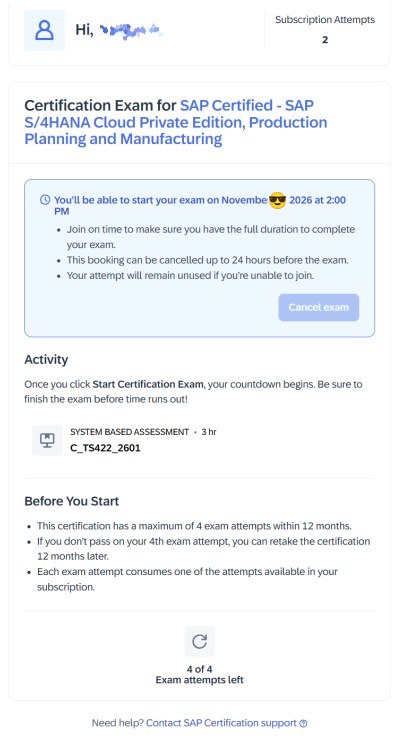 Figure 1. The C_TS422 exam page in Certification Hub
Eligibility and the practice environment
Eligibility and the practice setup were the same as for MM. I took the exam through an SAP Learning Hub subscription; the details are in MM part 1. Three points matter most for PP candidates.
- Practice system: The subscription includes a practice system that is almost identical to the exam environment. For a hands-on exam, the hours you spend in it are close to all of your preparation.
- When an attempt is used: Booking alone does not use an attempt. One is used when you start the exam at the confirmed time.
- Work experience is not the standard screen: Every company lays out its screens and habits differently. The exam follows SAP’s standard screens and standard flow, so even practitioners should practice those separately.
The official learning journey: 11 courses
The C_TS422 learning journey on SAP Learning contains the 11 courses below. Since the exam format changed, the exam page no longer lists weightings by topic, so this list is the official reference for gauging the scope. It is not free: you need a subscription.
| Code | Course | What it covers | Length |
|---|---|---|---|
| S4C03 | Implementing SAP S/4HANA Cloud Private Edition | Basics of implementing Private Edition | 12 hr+ |
| SL_RISE419 | Introducing RISE with SAP Methodology | The RISE with SAP methodology | 2 hr+ |
| S42000 | Discovering the Basics of SAP S/4HANA Manufacturing | Manufacturing fundamentals | 2 hr |
| S42010 | Exploring Business Processes in SAP S/4HANA Production Planning | The whole production planning process | 2 hr+ |
| S42020 | Exploring Business Processes in SAP S/4HANA Discrete Shopfloor Control | Shop floor execution in discrete manufacturing | 6 hr+ |
| S42025 | Exploring Business Processes in SAP S/4HANA Process Shopfloor Control | Shop floor execution in process manufacturing | 6 hr+ |
| S42100 | Exploring Basic Data for Manufacturing and Product Management in SAP S/4HANA | Master data | 12 hr+ |
| S42220 | Exploring Production Planning in SAP S/4HANA | Demand management, planning strategies, MRP | 6 hr+ |
| S42240 | Exploring Advanced Production Planning with SAP S/4HANA PP/DS | Advanced planning (PP/DS) | 14 hr+ |
| S42300 | Exploring Capacity Planning in SAP S/4HANA | Capacity planning | 5 hr+ |
| S4260 | Manage Production Orders in SAP S/4HANA Manufacturing | The full production order lifecycle | 6 hr+ |
Table 1. The official C_TS422 learning journey. Lengths as shown on SAP Learning.
Together they add up to more than 70 hours. The first two courses are about implementation methodology and touch the exam tasks less directly; the ones closest to the actual tasks are S42100 (master data), S42220 (planning) and S4260 (production orders). Even practitioners should set aside separate time for areas their company doesn’t use, such as process manufacturing (S42025) or PP/DS (S42240).
How the hands-on exam runs
Once you start, you log in to the system and work through the tasks on the instruction sheet. The structure is simple.
- A designated user for each task: Each task is done while logged in as a specific user, much like each station in a kitchen has its own cook.
- Four large tasks with subtasks: There are four large tasks, each with several subtasks.
- Graded on results: What counts is not how long you spent on a screen but the results you produced, which the system grades.
The C_TS422 task flow, from master data to completion
The four tasks are not separate puzzles. They follow the order in which a plate comes together in a kitchen. As a general business flow, it looks like this.
- Master data: material → BOM → work center → routing. You decide which ingredients (material), which recipe (BOM), which station (work center) and which steps (routing). More in SAP PP master data.
- Planning: demand → MRP run → planned order → conversion to production order. You decide how many portions to make (MRP), then turn the resulting meal plan into an actual cooking ticket (planned vs. production orders).
- Execution: staging and goods issue → confirmation. You take ingredients from the storeroom to the station and record that the cooking is done (GI, GR, CNF).
- Completion: goods receipt → checking stock and order status. After the finished plate goes out, you check that stock and order status ended up as they should.
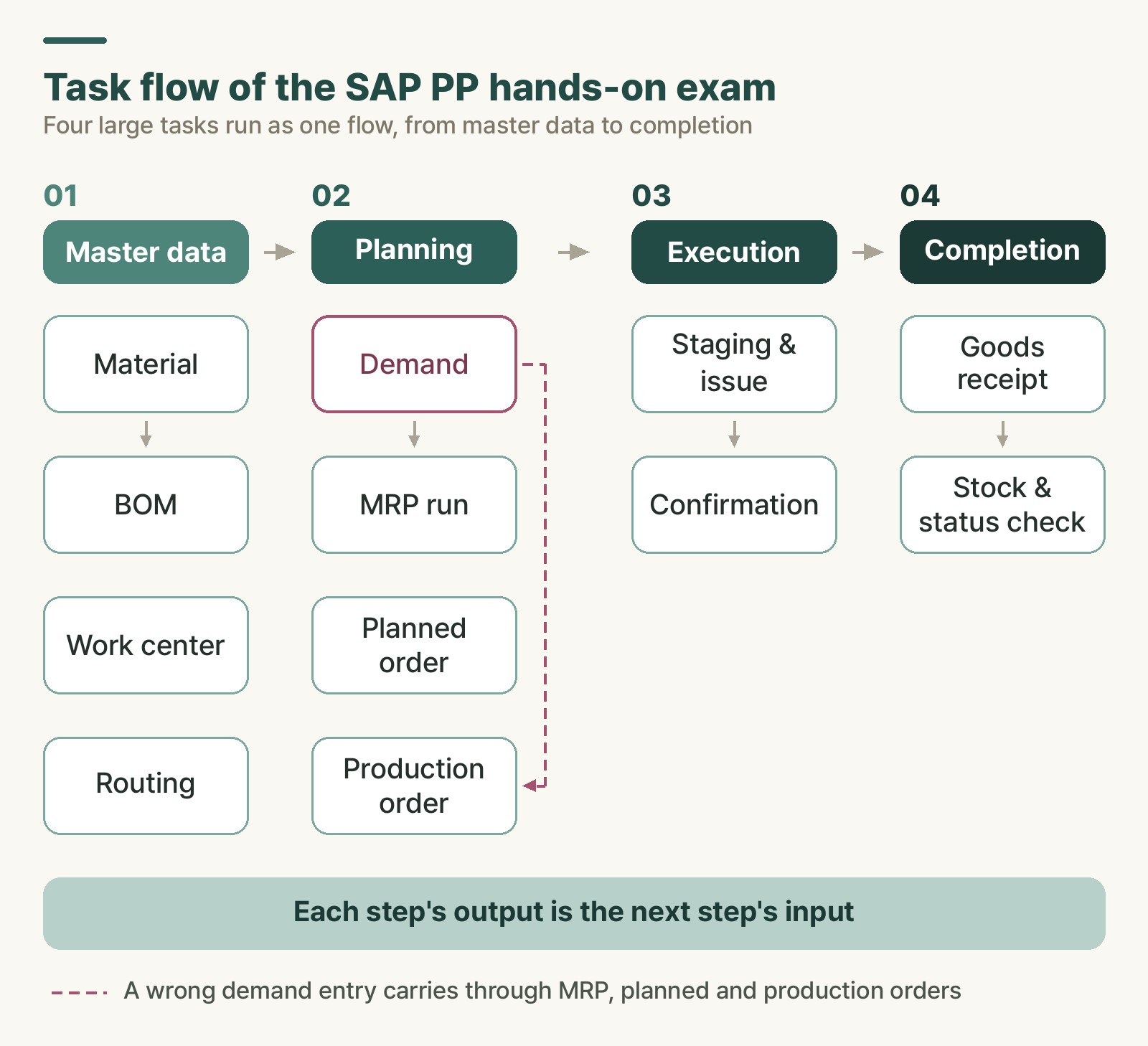 Figure 2. The C_TS422 task flow. No real codes or values are shown.
What to check at each step, and where people slip
These are points that come up again and again in the course material and practice while you learn the standard PP flow. While practicing, run through the right-hand column once at each step.
| Step | What to check in the standard flow | Where it is easy to slip |
|---|---|---|
| Master data | Plant views of the material (MRP, work scheduling), BOM components, work center, routing operations | If the valid-from date is later than the date you process on, later steps cannot read the BOM or routing |
| Planning | Demand, MRP result, planned orders | Read the MRP result in the stock/requirements list. Existing stock and expected receipts reduce the planned quantity |
| Execution | Order release, goods issue, confirmation | An order that is not released accepts no goods issue or confirmation. Backflush components are issued automatically at confirmation |
| Completion | Goods receipt, stock, order status | Order status depends on the confirmed and received quantities. Finishing a screen does not mean the status is right |
Table 2. Checkpoints by step, based on the general standard PP flow.
The table has one thread running through it. After you close a processing screen, look at the result again in a display screen. For master data, check the saved values; for planning, the MRP result; for execution and completion, stock and order status. You can read more about each concept in MRP, production order status and common PP T-codes.
Subtasks are linked to each other
The most important thing about this exam is that the subtasks within a task are linked. What you create in one step becomes the input for the next.
The planning task is a good example. If you enter the wrong demand quantity or date, the MRP result changes. The planned orders created from that result, and the production orders converted from them, go wrong one after another. It is like a single order quantity jotted down in the morning throwing off the whole day’s prep and portion count. The dashed line in Figure 2 shows that path.
That is why understanding “why this comes next” matters more than memorizing menu paths. If you know the flow, you can guess what to do next even on an unfamiliar screen, and when a result looks wrong, you can see which step to go back to.
💡 Key point: Each time you finish a subtask, remember that the next step will take its result as is. One value you enter early becomes the raw material for every step after it.
Rabbit’s Takeaway
The best people in a kitchen are not the ones who memorized the recipe steps, but the ones who know why an ingredient is needed right now. C_TS422 was the same. Instead of memorizing screen order, understand that each step’s output is the next step’s input, and the four tasks come together as one plate. 😎
Read more