
SAP MM certification C_TS452 exam review: three trips into the practice kitchen
A complete review of passing the SAP MM certification (C_TS452): three attempts, the exam structure, why I failed, handling an exam system defect, and how I prepared to pass.
Hi, this is Rabbit! 🐰
A kitchen feels different the first time you walk in and the third time. You start to see what to take out first and where to taste along the way.
I passed the SAP MM certification C_TS452 on my third attempt. Since it is a hands-on exam where you complete tasks in a real system, there was quite a gap between knowing the material and executing it exactly in the exam room. This post pulls the three-part series together in one place.
Three-line summary
- C_TS452 is a hands-on (SyBA) certification for S/4HANA sourcing and procurement, graded only on whether saved values match the instructions.
- I failed the first attempt because of machine-translated instructions and no check before saving, and the second because of an exam system defect.
- On the third attempt, English instructions, checks before and after saving, and a final full review got me a pass.
Three exam attempts
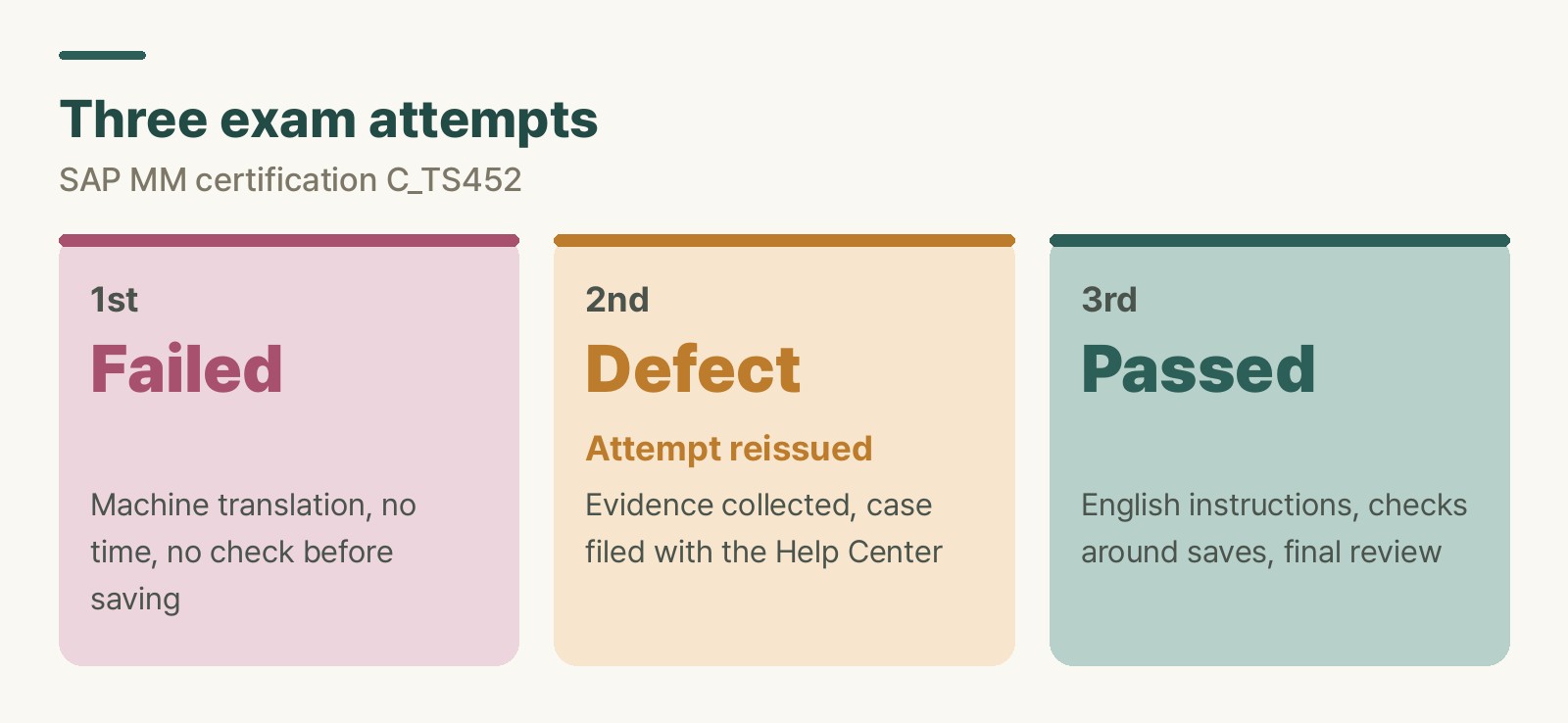 Figure 1. Three exam attempts. The exam version was C_TS452_2601, and the pass mark was 76%.
Series contents
- Exam structure and preparation: what C_TS452 covers, how to get eligibility and a practice system through Learning Hub, how the hands-on SyBA exam works, and why a PP practitioner started with MM
- First and second attempts failed: machine-translated instructions and time allocation, the trap of not checking before saving, and how I filed a support case after an exam system defect and got the attempt back
- Practice and passing: how I practiced with English course material, where mistakes tend to happen in a hands-on exam, exam-day order and time allocation, and Stay Certified
What three attempts left me with
- Execution decides the score, not knowledge. I missed the first attempt not because I didn’t know, but because I didn’t check against the instructions before saving.
- Read the instructions in English. The Korean instructions are machine-translated, and some numbers and structure read differently from the original.
- Check before and after saving. Later tasks use the output of earlier ones, so one mistake spreads across several tasks.
- If the system misbehaves, keep evidence. If it is a defect that is not the candidate’s fault, a support case can get your attempt back.
Rabbit’s Takeaway
Across three trips into the kitchen, what changed most was not how much I knew. It was how I read the recipe and the habit of checking before the plate went out. A hands-on exam scores you on what you executed by the instructions, not on how much you know. I hope this record serves as a small map for anyone preparing for the same exam 😎
Read more