
SAP MM certification C_TS452 first attempt failed: cooking from a mistranslated recipe
A review of my first SAP MM certification (C_TS452) attempt at 31.43%: why 3 hours ran out, the trap of machine-translated instructions, and why half the tasks I thought I finished scored zero.
Hi, this is Rabbit! 🐰
Have you ever cooked from a foreign cookbook run through a translator? Most of it reads fine, but every now and then “2 teaspoons of sugar” turns into “2 cups of sugar.” You follow the recipe exactly, and the dish still falls apart.
In September 2026, I took my first SAP MM certification, C_TS452 exam. The result was 31.43%, less than half of the 76% pass mark. When I pressed submit, I had no idea it would be that low. There were tasks I never reached because I ran out of time, but I thought most of what I did finish was correct. Working backward from the score, though, nearly half of the tasks I thought I had finished scored zero.
In SAP certification exams I once wrote that “if your practical skills are solid, it’s realistically a 40-minute-to-1-hour exam.” At least for a module I was learning for the first time, that was not true. Even on my third attempt, after plenty of practice, simply working through the tasks without getting stuck took 80–90 minutes, and with verification before submitting it took about 2 hours. This post is also that correction.
Three-line summary
- The first cause was the machine-translated Korean instructions. Places where numbers and structure read differently from the original turned straight into zero points.
- I spent about 100 minutes in unfamiliar configuration screens and never touched the last tasks.
- The biggest cause was not checking against the instructions before saving. I lost more points on things I knew than on things I didn’t.
C_TS452 first attempt, cause 1: machine-translated instructions
When the exam starts, you can choose the language of the task instructions. I naturally chose Korean, and that was my first mistake.
The Korean instructions are machine-translated. Most of it is readable, but some of the numbers and structure that the grading depends on read differently from the original. Reordered sentences made it unclear which value went where, or made a setup read differently from what the original meant. Reading the English original would have avoided that confusion.
As I explained in Part 1, a SyBA exam checks whether the saved values match the instructions exactly. If the translation is wrong, you score zero even when you follow it. And because later tasks use the output of earlier ones, one wrong first step brings down everything after it. I lost an entire group of tasks this way.
💡 Key point: in SAP certification exams I said to turn off your browser’s auto-translate. For the same reason, it is safer to choose English for the instruction language too. In a system whose menus and field names are in English, English instructions are also faster to compare against.
Cause 2: time sucked into one task
Three hours sounds generous. Divide it by the number of sub-exercises, though, and you get 4–5 minutes per item. Once you start wandering on a single screen, the time drains fast.
In my first attempt I spent about 100 minutes on a single task, lost in configuration screens (configuration means setting the rules for how the system behaves) that I rarely touched at work. That is more than half of the total time. Ten minutes to resolve one unfamiliar error message, ten minutes to find one menu path. About 70 minutes disappeared on just a few screens like that. In the end I either never touched the last tasks or skimmed through them in five minutes.
Cause 3: no check against the instructions before saving
This was the most painful cause. Chased by the clock, I filled in a screen, pressed Save, and moved straight on. The results looked like this.
- One extra zero typed into an amount field
- A required field left out, saving a result different from what was intended
- One extra step, not in the instructions, done out of work habit, so a later task did not behave as intended
The last one stuck with me. At work there are habits that make life easier, but the instructions assumed the process would run without that step. It is like adding a seasoning that is not in the recipe because you think the customer will like it. It is a trap that people who know the system well fall into most easily.
The first attempt in numbers
- Sub-exercises attempted: about two-thirds of the total
- Of those, accepted: roughly half (estimated)
- Result: 31.43%
I lost more on things I knew but got wrong than on things I did not know.
What the first failure gave me
The failure stung, but it clearly gave me something.
- A feel for the hands-on format: how the screens flow, how much time pressure there is, and how unforgiving it is when earlier tasks feed later ones.
- The need for English: from then on, I switched all my study to the English course material.
- The need for a procedure: one step, “check before you save,” mattered more than piling up more knowledge.
Here are the three causes, and what I changed afterward, on one page.
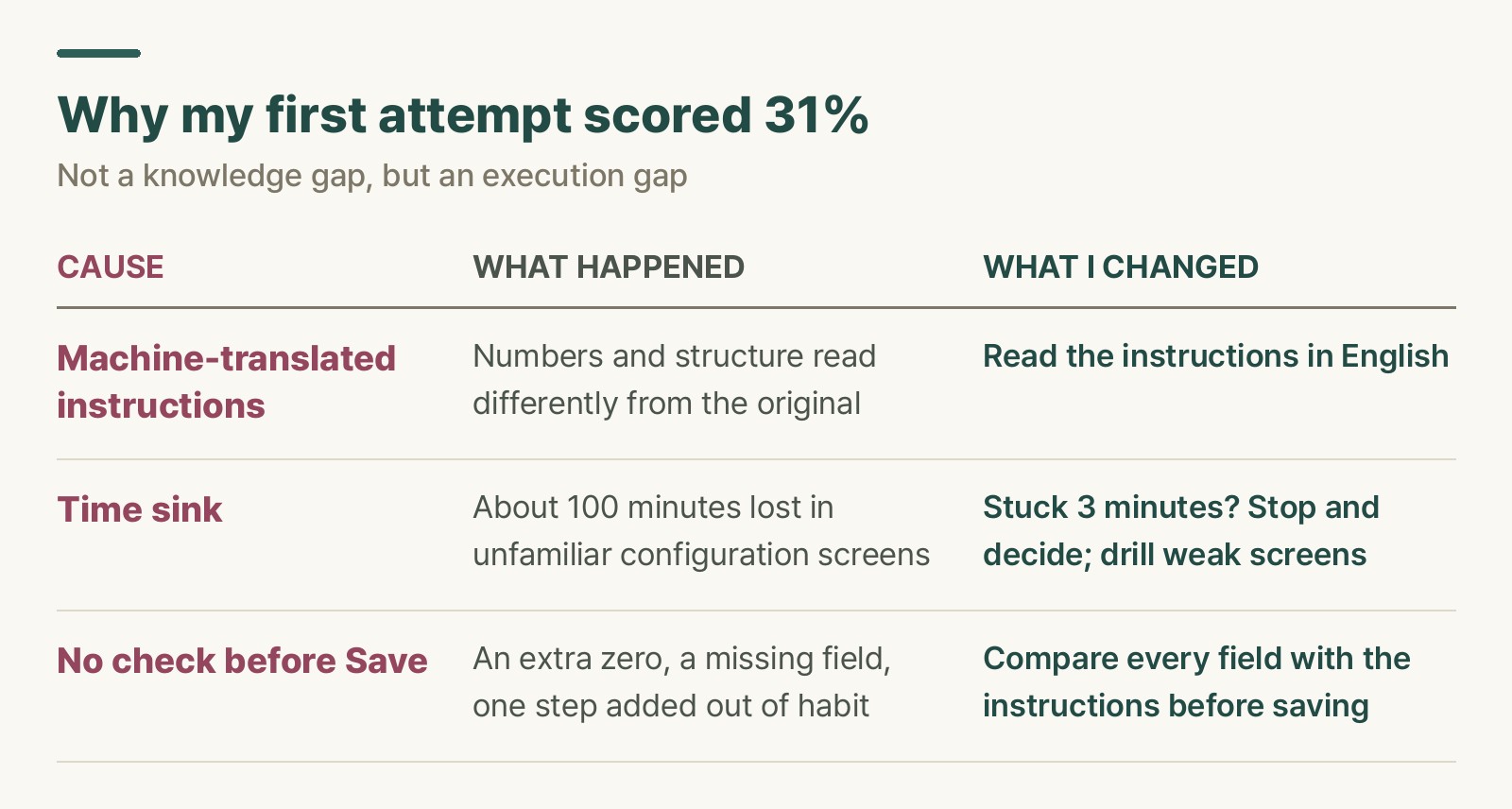 Figure 1. The causes of my 31% first attempt and what I changed afterward
Rabbit’s Takeaway
What I lacked in the first attempt was not MM knowledge. What decided the score was the ability to execute what I knew, by the instructions, within the time. I trusted a mistranslated recipe, spent all my time on one dish, and never checked the plate against the recipe before serving it. The 31% was less a measure of my skill than a measure of having no procedure 😎
Read more